Pineal Guardian Review : Ingredients, Benefits, How It Works & Is It Worth Buying?
Introduction: Exploring Pineal Guardian for Brain and Memory Wellness
Memory, concentration, and mental clarity are important parts of everyday life. Whether you’re managing work responsibilities, studying, or simply trying to stay mentally sharp as you age, maintaining healthy cognitive function is a common wellness goal.
This growing interest in brain health has led to the popularity of supplements containing botanical extracts, mushrooms, algae, and other naturally occurring compounds.
One product attracting attention is Pineal Guardian, a liquid dietary supplement marketed for memory function, concentration, and overall brain wellness.
Its formula combines several plant-derived ingredients, including ginkgo biloba, lion’s mane mushroom, bacopa monnieri, and other botanicals.
But how does Pineal Guardian work? Are its ingredients supported by scientific research? And is it worth considering
In this detailed review, we’ll explore its composition, advertised benefits, scientific limitations, potential side effects, pricing considerations, and overall value.
What Is Pineal Guardian?
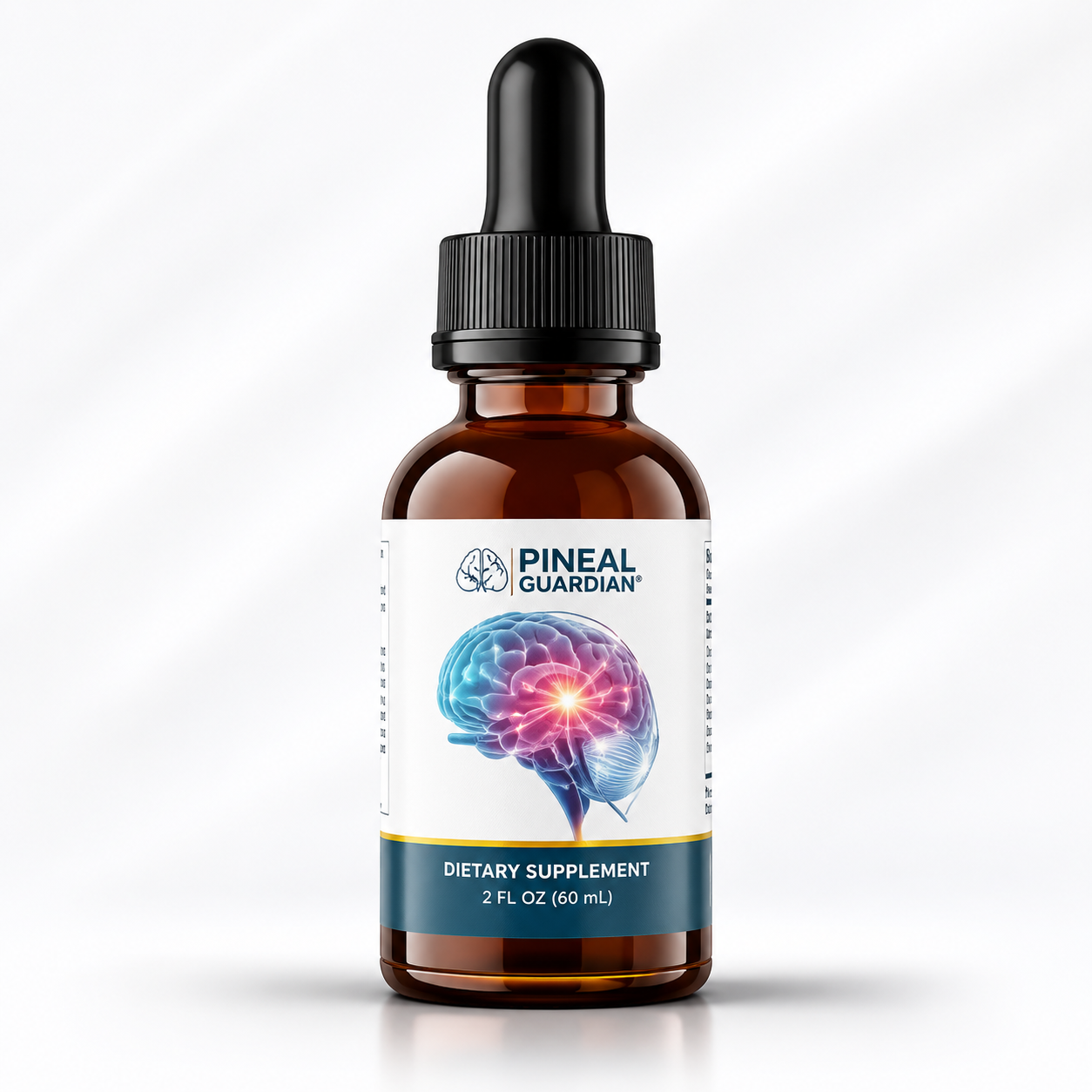
Pineal Guardian is a liquid dietary supplement formulated with a combination of botanical extracts, algae-based ingredients, and mushrooms.
The manufacturer promotes it as a nutritional product intended to support memory function, focus, and general cognitive wellness.
Unlike traditional supplements supplied in capsules or tablets, Pineal Guardian comes in a liquid dropper bottle.
Key Features of Pineal Guardian
- Liquid supplement formulation
- Contains botanical and mushroom-derived ingredients
- Marketed for memory and cognitive wellness
- Includes traditionally used plant compounds
- Designed for convenient daily use
- Contains ingredients researched for their antioxidant properties
- Manufacturer advertises a money-back guarantee
Pineal Guardian should be viewed as a dietary supplement rather than a proven medical treatment for memory loss, dementia, or other neurological conditions.
How Does Pineal Guardian Work?
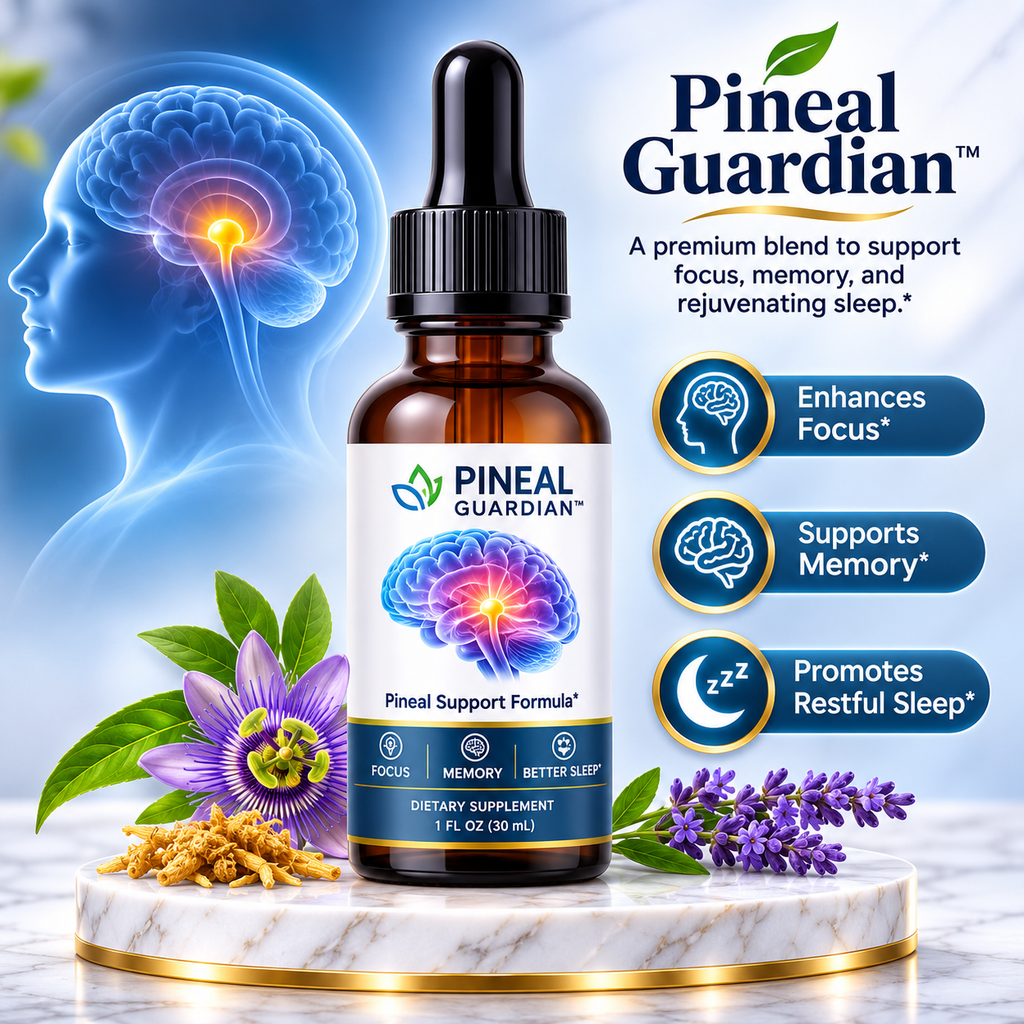
Pineal Guardian’s marketing focuses on supporting brain function through a mixture of plant-based ingredients.
The formula’s proposed benefits can be considered through several areas of nutritional and biological research.
1. Supporting Normal Cognitive Function
Certain ingredients used in Pineal Guardian, including bacopa monnieri and ginkgo biloba, have been investigated for their potential effects on memory and cognitive performance.
Some studies have reported modest improvements in particular cognitive measures, while others have found little or no meaningful benefit.
Research findings depend on the ingredient, dosage, study duration, and participants.
2. Providing Antioxidant Compounds
Several botanicals and algae in Pineal Guardian contain naturally occurring antioxidant compounds.
Antioxidants help protect cells against certain forms of oxidative damage.
However, consuming antioxidant-rich supplements does not necessarily translate into measurable improvements in memory or brain function.
3. Exploring Mushroom-Based Brain Wellness
Lion’s mane mushroom has attracted scientific interest because it contains compounds studied for possible effects on nerve-related biological pathways.
While early laboratory and small human studies have produced interesting results, larger clinical trials are still needed.
4. The Pineal Gland Connection
The pineal gland is a small endocrine structure in the brain that produces melatonin, a hormone involved in regulating the sleep-wake cycle.
Pineal Guardian’s advertising sometimes discusses pineal-gland cleansing or decalcification.
However, there is no reliable clinical evidence demonstrating that Pineal Guardian removes pineal-gland calcification or that doing so improves memory, concentration, or cognitive performance.
The formula should therefore be evaluated primarily through its ingredients and available scientific evidence rather than claims about pineal-gland detoxification.
Pineal Guardian Ingredients: A Detailed Breakdown
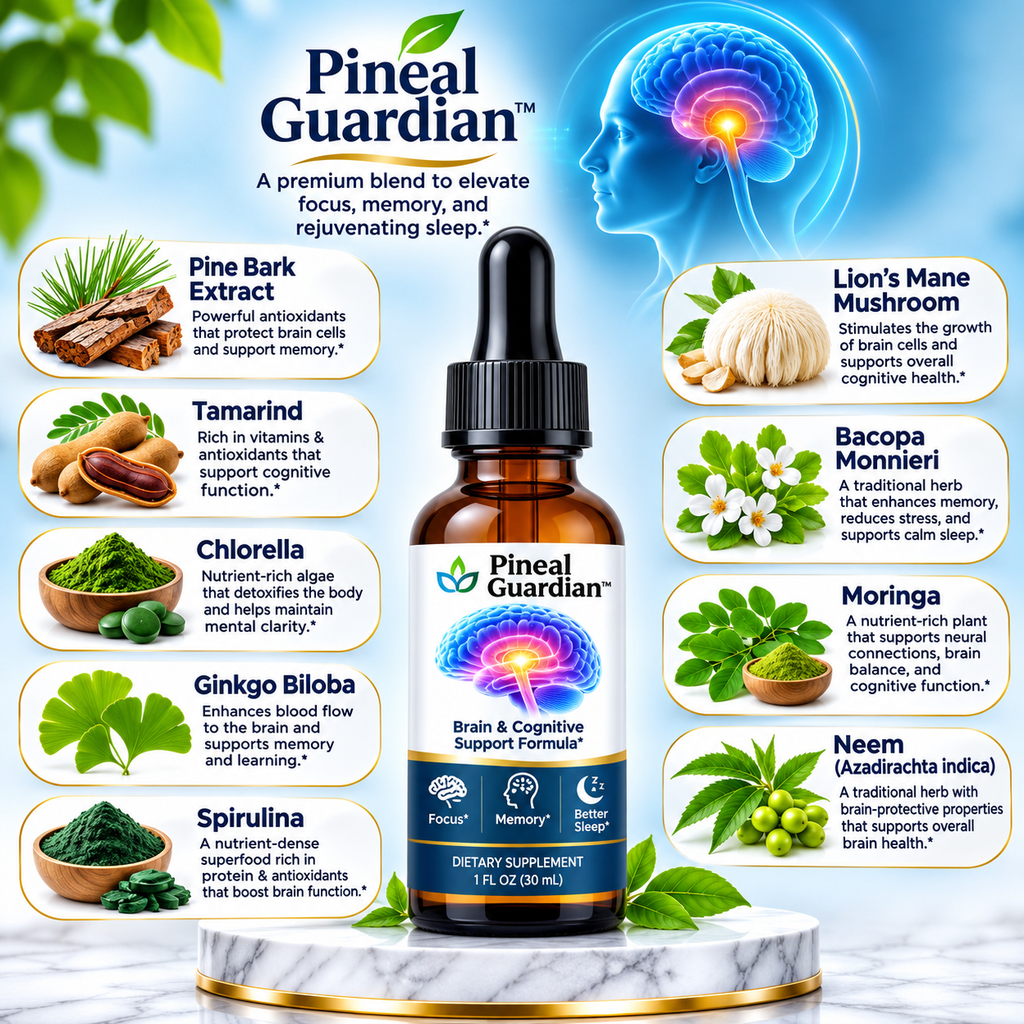
Understanding the ingredients is essential when evaluating any nutritional supplement.
According to published Pineal Guardian product information, its advertised formulation includes nine principal botanical, mushroom, and algae-based ingredients.
Exact concentrations and extract standardization should be verified from the current product label.
1. Pine Bark Extract
Pine bark extract contains plant compounds known as polyphenols, including procyanidins.
These compounds have been investigated for their antioxidant properties and potential effects on circulation.
Potential nutritional roles:
- Supplies naturally occurring antioxidant compounds
- Has been studied for vascular health
- May contribute plant polyphenols to the formula
Although some studies have explored possible cognitive effects, the results do not establish that Pineal Guardian itself improves memory.
2. Tamarind
Tamarind is a tropical fruit containing organic acids, polyphenols, and other naturally occurring plant compounds.
It has a long history of culinary and traditional use.
Potential nutritional roles:
- Provides naturally occurring plant antioxidants
- Contains various bioactive compounds
- Contributes botanical diversity to the supplement
There is insufficient high-quality human evidence showing that tamarind supplements significantly improve memory or concentration.
3. Chlorella
Chlorella is a freshwater green microalga containing protein, pigments, vitamins, and minerals.
It is commonly marketed as a nutrient-rich ingredient in wellness products.
Potential nutritional roles:
- Provides naturally occurring nutrients
- Contains chlorophyll and carotenoids
- Supplies antioxidant-related plant compounds
Claims that chlorella removes toxins from the brain or decalcifies the pineal gland are not established by reliable clinical research.
4. Ginkgo Biloba
Ginkgo biloba is one of the most extensively investigated botanical ingredients used in supplements promoted for memory and cognitive function.
Its leaf extracts contain flavonoids and terpene lactones.
Potential roles:
- Has been studied for memory and attention
- Contains antioxidant-related compounds
- Has been investigated for vascular effects
However, large studies have not established that ginkgo biloba prevents dementia or reliably slows cognitive decline.
Ginkgo can also interact with medications, particularly blood-thinning drugs.
5. Spirulina
Spirulina is a nutrient-containing cyanobacterium commonly used in nutritional supplements.
It contains protein, pigments, and antioxidant-related compounds such as phycocyanin.
Potential nutritional roles:
- Supplies various naturally occurring nutrients
- Contains antioxidant-related compounds
- Has been investigated for metabolic and inflammatory markers
Direct evidence that spirulina supplementation improves memory in healthy adults remains limited.
6. Lion’s Mane Mushroom
Lion’s mane, scientifically known as Hericium erinaceus, is an edible mushroom researched for potential neurological and cognitive applications.
It contains compounds such as hericenones and erinacines.
Potential roles:
- Has been researched for possible cognitive effects
- Contains biologically active mushroom compounds
- Has attracted interest in nerve-growth-related laboratory research
Some small clinical studies have explored cognitive outcomes, but these findings are preliminary.
It would be inaccurate to claim that lion’s mane reliably regenerates brain cells or reverses memory loss in humans.
7. Bacopa Monnieri
Bacopa monnieri is an herb traditionally used in Ayurvedic practices.
Its principal studied constituents include bacosides.
Potential roles:
- Has been investigated for memory performance
- Has been studied for learning and information processing
- Contains several naturally occurring plant compounds
Some clinical trials suggest modest improvements in specific memory measures after sustained use of standardized extracts.
However, outcomes vary, and the results cannot automatically be applied to Pineal Guardian without knowing its ingredient concentrations.
8. Moringa
Moringa, commonly called the drumstick tree, is a botanical ingredient containing vitamins, minerals, and plant polyphenols.
Potential nutritional roles:
- Supplies naturally occurring nutrients
- Contains antioxidant-related compounds
- Has been investigated for several metabolic health applications
Despite its nutritional profile, there is insufficient evidence that moringa directly improves human memory or mental clarity.
9. Neem
Neem is a tree native to parts of South Asia and is traditionally used in various wellness practices.
Its leaves and other plant parts contain biologically active compounds.
Potential roles:
- Contains naturally occurring phytochemicals
- Has been investigated for antimicrobial and other biological activities
- Has a history of traditional botanical use
Neem is not an established cognitive-enhancement ingredient.
Certain neem preparations may have important safety concerns, making ingredient form and dosage particularly relevant.
Potential Benefits of Pineal Guardian
Pineal Guardian is promoted for several areas of brain and general wellness.
The following are possible areas of interest rather than guaranteed outcomes.
1. Memory Wellness
The formula includes ingredients such as bacopa monnieri and ginkgo biloba, which have been studied for certain aspects of memory performance.
However, research on individual extracts does not establish the effectiveness of Pineal Guardian’s complete formula.
2. Mental Focus and Concentration
Some consumers are interested in botanical supplements as part of a routine intended to support concentration.
The formulation contains ingredients researched for cognitive outcomes, but a noticeable improvement in focus cannot be guaranteed.
3. Antioxidant Intake
Pine bark, spirulina, moringa, and several other ingredients contain naturally occurring antioxidant-related compounds.
These are of nutritional interest, although their presence alone does not establish improved brain performance.
4. General Brain Wellness
Pineal Guardian combines ingredients from several botanical categories, including mushrooms, algae, and herbal extracts.
This combination may appeal to consumers interested in plant-based nutritional products.
5. Convenient Liquid Format
The dropper format may be easier for some people to use than tablets or capsules.
Convenience is one of the product’s practical features, independent of its health claims.
Can Pineal Guardian Really Improve Memory?
This is one of the most important questions to consider before purchasing.
Some ingredients used in cognitive supplements have been investigated in clinical research.
For example, bacopa monnieri has shown promising results in certain memory studies, while evidence for ginkgo biloba remains inconsistent.
Lion’s mane mushroom has also attracted interest, although larger and more rigorous studies are needed.
But there is an important distinction between research on an individual ingredient and research on a finished supplement.
A combination formula may contain different amounts, extract types, and concentrations from those used in scientific trials.
There is insufficient reliable clinical evidence demonstrating that the finished Pineal Guardian formula consistently improves memory, prevents cognitive decline, or treats neurological conditions.
Consumers should be cautious about advertisements promising dramatic memory recovery or rapid improvements.
Pineal Guardian and Pineal Gland Health
The product’s name refers to the pineal gland, which plays an important role in melatonin production.
Melatonin helps regulate circadian rhythms and normal sleep-wake patterns.
However, marketing claims about removing fluoride deposits, cleansing the pineal gland, activating a “third eye,” or unlocking unusual mental abilities should not be mistaken for established medical science.
There is no convincing clinical evidence that Pineal Guardian performs those functions.
Readers interested in improving sleep or concentration should also consider established factors such as sleep duration, consistent sleep schedules, regular activity, and appropriate medical evaluation.
How to Use Pineal Guardian
Pineal Guardian is marketed as a liquid supplement intended for daily use.
For safe use:
- Read the current product label carefully.
- Follow the manufacturer’s serving instructions.
- Use the supplied dropper as directed.
- Do not exceed the recommended amount.
- Ask a qualified healthcare professional about possible interactions if you take medication.
Serving instructions may differ among product versions, so the actual bottle label should take priority over third-party websites.
Who Might Consider Pineal Guardian?
Pineal Guardian may appeal to adults who:
- Are interested in botanical wellness supplements
- Prefer liquid preparations over capsules
- Want to learn about ingredients used in cognitive-health products
- Understand that the product is not a proven treatment for memory problems
- Are willing to evaluate its price and ingredient information carefully
People experiencing persistent or worsening memory difficulties should seek medical assessment rather than relying on a dietary supplement.
Pineal Guardian Side Effects and Safety
Although Pineal Guardian is marketed using natural ingredients, natural products can still produce side effects.
Possible Digestive Discomfort
Botanical extracts may cause nausea, stomach discomfort, or changes in digestion in some individuals.
Medication Interactions
Ginkgo biloba may interact with anticoagulant or antiplatelet medications and potentially increase bleeding concerns.
Other botanical ingredients may also interact with medications.
Allergic Reactions
Individuals with sensitivities to mushrooms, algae, or specific herbs should check the full ingredient list before use.
Ingredient Quality
The safety of botanical supplements depends partly on manufacturing standards, ingredient purity, and accurate labeling.
Special Precautions
Pregnant or breastfeeding individuals, people managing chronic medical conditions, and anyone taking medication should seek professional advice before considering Pineal Guardian.
If unusual symptoms occur after taking a supplement, discontinue use and seek appropriate medical guidance.
Pineal Guardian Pros and Cons
Pros
- Convenient liquid-dropper presentation
- Includes several recognizable botanical ingredients
- Contains ingredients studied individually for cognitive-related outcomes
- Combines plant and mushroom-derived compounds
- Manufacturer advertises a refund guarantee
- May appeal to consumers interested in nutritional wellness products
Cons
- Limited reliable clinical evidence for the complete formula
- Exact ingredient concentrations are not consistently clear in publicly available promotional material
- Cognitive improvements are not guaranteed
- Potential medication interactions and side effects
- Pineal-gland detoxification claims are not scientifically established
- Ongoing purchase costs may be significant
Pineal Guardian Pricing and Package Options
Pineal Guardian Pricing and Package Options
Pineal Guardian offers three purchasing packages, allowing customers to choose between a 30-day, 90-day, or 180-day supply.
According to the current promotional sales page, the product costs between $39 and $69 per bottle, depending on the package selected.
The larger packages offer lower prices per bottle, while the single-bottle option requires the smallest upfront payment.
1. Single Bottle Package — 30-Day Supply
Price: $69 per bottle
Package Price: $69
Shipping: $9.99
Total: $78.99 before any applicable taxes
This package contains one bottle of Pineal Guardian, providing approximately 30 days of use when taken according to the manufacturer’s directions.
It is the smallest package available and requires the lowest initial purchase amount.
Package Features:
- 1 bottle of Pineal Guardian
- 30-day supply
- $69 per bottle
- $9.99 shipping fee
- Advertised money-back guarantee
This option may appeal to buyers who do not want to purchase several bottles immediately.
However, it has the highest cost per bottle.
2. Three Bottle Package — 90-Day Supply
Price: $59 per bottle
Package Price: $177
Shipping: $9.99
Total: $186.99 before any applicable taxes
The three-bottle package provides approximately 90 days of supply.
It offers a lower price per bottle compared with the single-bottle package.
Package Features:
- 3 bottles of Pineal Guardian
- 90-day supply
- $59 per bottle
- $177 product cost
- $9.99 shipping fee
- 4 complimentary digital bonuses advertised
- Advertised money-back guarantee
The sales page promotes a $120 saving compared with its displayed original bundle price of $297.
This package provides a middle option between the lowest upfront purchase and the largest supply.
3. Six Bottle Package — 180-Day Supply
Price: $39 per bottle
Package Price: $234
Shipping: FREE
Total: $234 before any applicable taxes
The six-bottle package is marked as the most popular offer on the Pineal Guardian sales page.
It provides approximately 180 days of supply and offers the lowest advertised cost per bottle.
Package Features:
- 6 bottles of Pineal Guardian
- 180-day supply
- $39 per bottle
- $234 total product cost
- Free shipping
- 4 complimentary digital bonuses advertised
- 365-day guarantee advertised
- Free ShipSelect membership advertised
The seller advertises a $360 saving compared with its displayed original bundle price of $594.
Although the six-bottle package has the lowest price per bottle, it requires the highest upfront payment.
Pineal Guardian Price Comparison
| Package | Price per Bottle | Shipping | Total |
|---|---|---|---|
| 1 Bottle | $69 | $9.99 | $78.99 |
| 3 Bottles | $59 | $9.99 | $186.99 |
| 6 Bottles | $39 | Free | $234 |
Which Pineal Guardian Package Offers the Best Value?
Based strictly on the advertised price per bottle, the six-bottle package offers the lowest unit price at $39.
The three-bottle package costs $59 per bottle, while the single-bottle package costs $69.
However, the cheapest price per bottle does not necessarily make a larger purchase the best choice for every customer.
Consumers should consider the total cost, ingredient information, possible interactions, and limited clinical evidence for the finished formula before purchasing a long-term supply.
Pineal Guardian Money-Back Guarantee
The sales page advertises a money-back guarantee and specifically highlights a 365-day guarantee on the six-bottle package.
Customers should review the actual terms and conditions before purchasing, including return eligibility, deadlines, and any shipping costs.
A refund guarantee does not establish a supplement’s safety or effectiveness.
Where to Buy Pineal Guardian
Pineal Guardian is available through its promotional sales website.
Before completing an order, review the current package selection, advertised bonuses, shipping charges, total checkout cost, and refund conditions.
View Pineal Guardian Product Details
Pineal Guardian Money-Back Guarantee
Pineal Guardian promotional websites advertise a 365-day money-back guarantee.
However, buyers should review the refund policy on the actual checkout website before purchasing.
Check whether the conditions include return deadlines, proof of purchase, return shipping costs, or other restrictions.
Keep your order confirmation and payment records in case you need to contact customer support.
Pineal Guardian vs. Other Brain Health Supplements
Pineal Guardian differs from many conventional multivitamin supplements by focusing on a mixture of botanicals, algae, and mushrooms.
Other cognitive wellness supplements may rely on vitamins, omega-3 fatty acids, caffeine, amino acids, or standardized herbal extracts.
The best choice depends on the user’s nutritional needs, medical circumstances, ingredient preferences, and budget.
Importantly, no supplement should be assumed to prevent dementia or reverse neurological decline.
Frequently Asked Questions
1. What is Pineal Guardian?
Pineal Guardian is a liquid dietary supplement marketed for memory, concentration, and general brain wellness.
2. Does Pineal Guardian improve memory?
Some of its individual ingredients have been studied for memory-related effects, but reliable evidence demonstrating the effectiveness of the complete formula is insufficient.
3. Does Pineal Guardian decalcify the pineal gland?
There is no convincing clinical evidence that Pineal Guardian removes pineal-gland calcification.
4. Is Pineal Guardian suitable for daily use?
The product is marketed for daily use, but suitability depends on the individual’s health, medications, and the actual supplement formulation.
5. Does Pineal Guardian contain lion’s mane mushroom?
Yes. Lion’s mane is among the ingredients identified in published Pineal Guardian product information.
6. Does Pineal Guardian contain ginkgo biloba?
Yes. Ginkgo biloba is included in the advertised ingredient list. People taking certain medications should be particularly cautious about possible interactions.
7. Is Pineal Guardian FDA-approved?
Dietary supplements are not approved by the US Food and Drug Administration for safety and effectiveness before marketing in the same way as prescription medicines.
8. Can Pineal Guardian prevent Alzheimer’s disease?
There is no reliable evidence that Pineal Guardian prevents Alzheimer’s disease or other forms of dementia.
9. How long does Pineal Guardian take to work?
There is no clinically established timeline for cognitive improvements from the finished product. Results, if any, may vary.
10. Are there any side effects?
Possible concerns include digestive discomfort, allergic reactions, and medication interactions. The specific risks depend on the ingredients and individual circumstances.
11. Where can I buy Pineal Guardian?
Consumers should review the product details and seller information associated with the specific offer before ordering.
12. Is Pineal Guardian worth buying in 2026?
Its value depends on the consumer’s expectations, budget, medical circumstances, and interest in its ingredients. It should not be purchased with the expectation of guaranteed improvements in memory or neurological health.
Final Verdict: Is Pineal Guardian Worth Buying in 2026?
Pineal Guardian is a liquid dietary supplement combining several botanical, algae-based, and mushroom-derived ingredients.
The formula includes recognizable ingredients such as ginkgo biloba, lion’s mane mushroom, bacopa monnieri, spirulina, pine bark, and moringa.
Some of these ingredients have been investigated for their possible cognitive and antioxidant-related effects.
However, promising findings from individual ingredient studies should not be interpreted as proof that the complete Pineal Guardian formula produces the same results.
There is also insufficient evidence supporting dramatic claims about pineal-gland detoxification, memory restoration, or the prevention of cognitive decline.
Our Final Verdict: Pineal Guardian may appeal to adults interested in botanical cognitive-wellness supplements, but its benefits remain uncertain. Buyers should review the complete ingredient label, possible interactions, current pricing, and refund conditions before making a decision.
A balanced lifestyle, adequate sleep, nutritious food, and professional healthcare remain important foundations for long-term brain health.
Explore Pineal Guardian
Affiliate Disclosure: Nutrivitalfit.com may earn a commission when readers purchase products through affiliate links on this website, at no additional cost to them. Our reviews aim to provide useful information about products, ingredients, research, and purchasing considerations.
Medical Disclaimer: This content is provided for informational purposes only and does not constitute medical advice. Dietary supplements are not substitutes for prescribed treatments or professional medical care. Consult a qualified healthcare professional before using a new supplement, especially if you have an existing medical condition or take medication.